3 private links
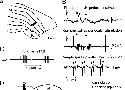
The standard view of neural signaling is that a neuron can influence its target cell by exciting or inhibiting it. An important aspect of the standard view is that learning consists of changing the efficacy of synapses, either strengthening (long-term potentiation) or weakening (long-term depression) them. In studying how cerebellar Purkinje cells change their responsiveness to a stimulus during learning of conditioned responses, we have found that these cells can learn the temporal relationship between two paired stimuli. The cells learn to respond at a particular time that reflects the time between the stimuli. This finding radically changes current views of both neural signaling and learning.

The question I am asking is whether, looking at ourselves from outside, we should come to view our attachment to rights...
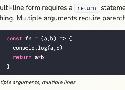
JavaScript has come a long way since I knew it as the “D” in DHTML. For anyone like me, who’s been reluctant to use the latest syntax that could require polyfills or a transpiler, I’ve written this cheatsheet to get you caught up on all the goodness that’s widely supported in modern browsers.

Read chapter Front Matter: First released in the Spring of 1999, How People Learn has been expanded to show how the theories and insights from the origina...

How to handle a man who plays games? I show you the games first, and then how you can handle him. Here's a quick tip though: if it's nasty games, get rid

Not music nerds, obviously. I don’t know anything about music. I know there are letters but sometimes the letters have squiggles; I know an octave doubles in pitch; I know you can
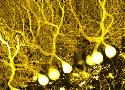
Neurons might contain something incredible within them.
Bing Sun, Jin Liu, Chong Xu
McAfee
Over the years, I've seen a lot of confusion about JavaScript function invocation. In particular, a lot of people have complained that the semantics of this in function invocations is confusing. In my opinion, a lot of this confusion is cleared up by understanding the core function invocation primitive, and

L’histoire du Réseau National de télécommunications pour la Technologie, l’Enseignement et la Recherche, constitué en Groupement d’Intérêt Public en janvier 1993, débute dans les années 1980, quand des acteurs scientifiques, de manière simultanée mais encore dispersée, commencent à s’organiser en réseaux. C’est poser d’emblée une originalité de Renater : des besoins et réalisations précèdent la mise en place de l’infrastructure nationale. Si, les origines largement universitaires et scientifiques d’Internet aux États-Unis ne sont plus à démontrer, celles d’Internet en France sont plus largement méconnues et demandent à être réévaluées.
Article sur le retour à la libc, avec la théorie et des exemples
De retour ! Après plus d'un an d'absence sur le blog, je décide enfin d'écrire un article annoncé sur Twitter il y a déjà plusieurs mois. Lorsque l'on débute dans le monde des exploits système, on...
Ensemble de documents réalisés pour la freeduc-sup.